An Automotive Legacy: Fueling the future of EV Adoption
What motivates consumers to make the switch from gasoline-powered vehicles to electric? For early adopters, the benefits are immediately apparent. But others might need more time to explore options.
And that’s why Bruno Cesar Krause Moras, a recent ASPIRE graduate, used his time at Purdue University to steer the conversation from the benefits of electric vehicles (EVs) into consumers’ motivations to adopt this relatively new technology.
Generational Questions
Moras’ interest in cars started at a young age. “When I was a child, I used to listen [to] my parents explain to me what my father[’s] job was,” he said. “My grandfather used to fix cars. My father, he sells pre-owned cars in Brazil.”
Moras sought opportunities to explore the transportation sector through research and higher education, gaining his bachelor’s degree in civil engineering at the Federal University of Technology – Parana, Brazil, and his master’s degree in construction engineering at the Polytechnic Institute of Braganca, Portugal.
Moras joined ASPIRE in August 2022 at the start of his Ph.D. program in Civil Engineering at Purdue. His research focused on understanding how different factors can influence public perceptions and how these perceptions affect the EV market.
“Why [would] someone…prefer to buy a used EV instead of a new EV? Of course, [the decision] is related to the price, but what are the reasons behind the price? They can differentiate from one person to the other,” he said, also thinking about his father’s job. “It was always in my mind, but as an updated version of what my father does.”
Over time, his research uncovered a multitude of factors, such as environmental benefits and consumer financial security, like whether consumers preferred leasing or purchasing an EV for their household or whether they were interested in buying pre-owned EVs.
“I also investigate public policies related to EV adoption, and everything else related to the adoption of electric vehicles,” he said. “[To foster EV adoption] we don’t need to look [only] at the vehicles, but how [the market] works.”
Gaining Leadership Skills & Hands-On Experience
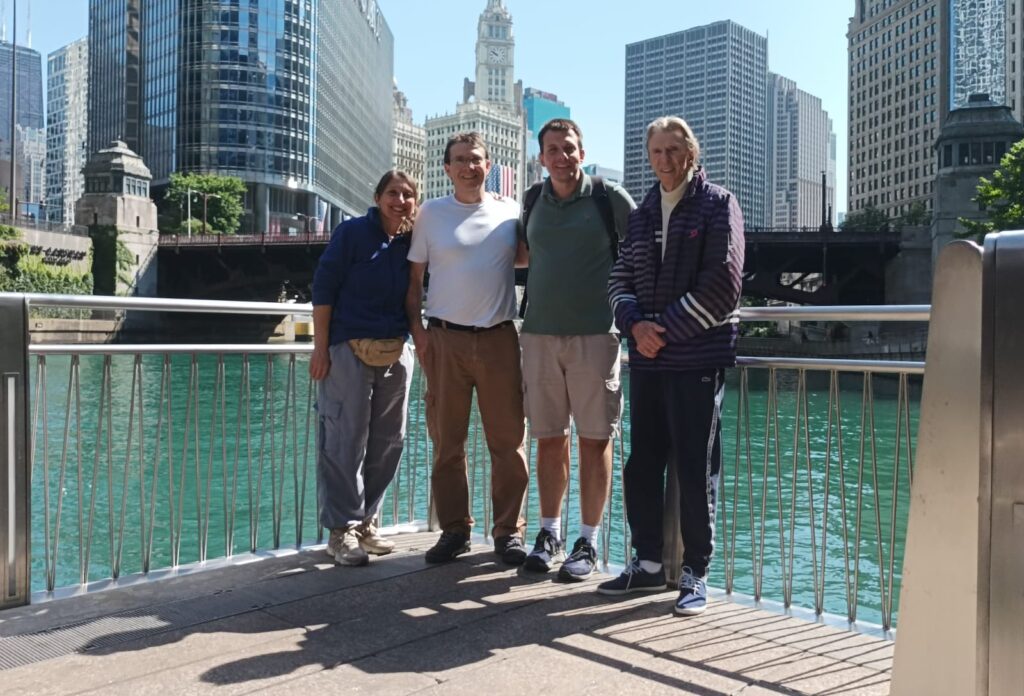
“One of the main points for me that I really like, besides representing the student, it was the Cohort trips,” Moras said. “We visit a lot of industry members from ASPIRE, and we had very insightful experiences with them.”
At ASPIRE, Moras served on the Council of Presidents (previously referred to as the Student Leadership Council, or SLC), a group of students representing the engineering research center across different campuses and research fields.
“During his year and a half on the Student Leadership Council, he played an active role in initiatives that strengthened student involvement and engagement,” shared Melanie Conrad, ASPIRE’s Student & Industry Relations Coordinator.
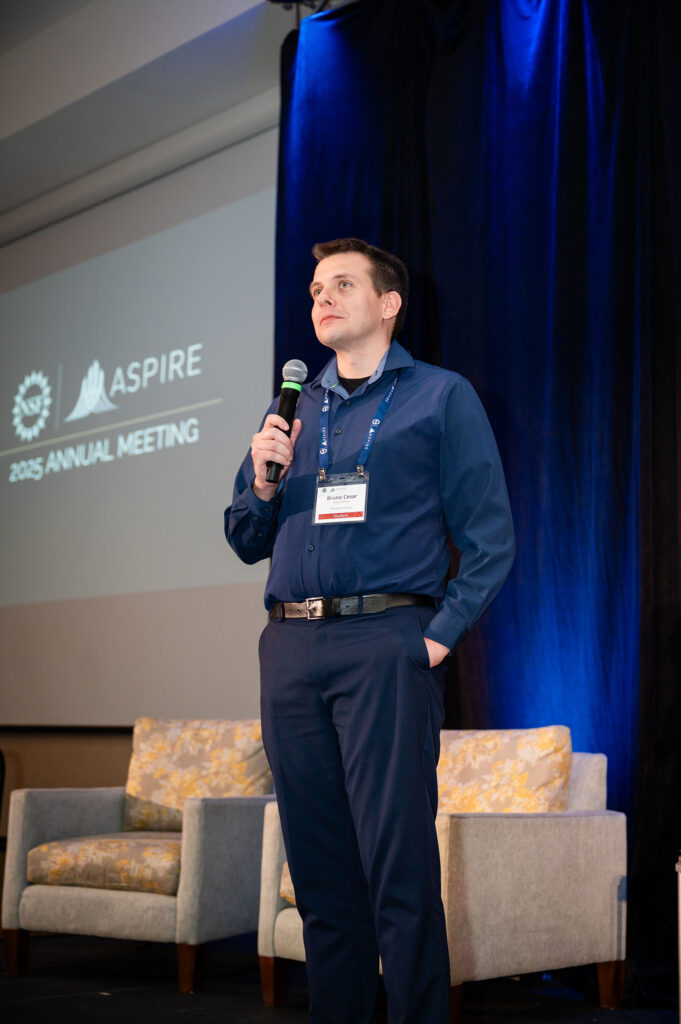
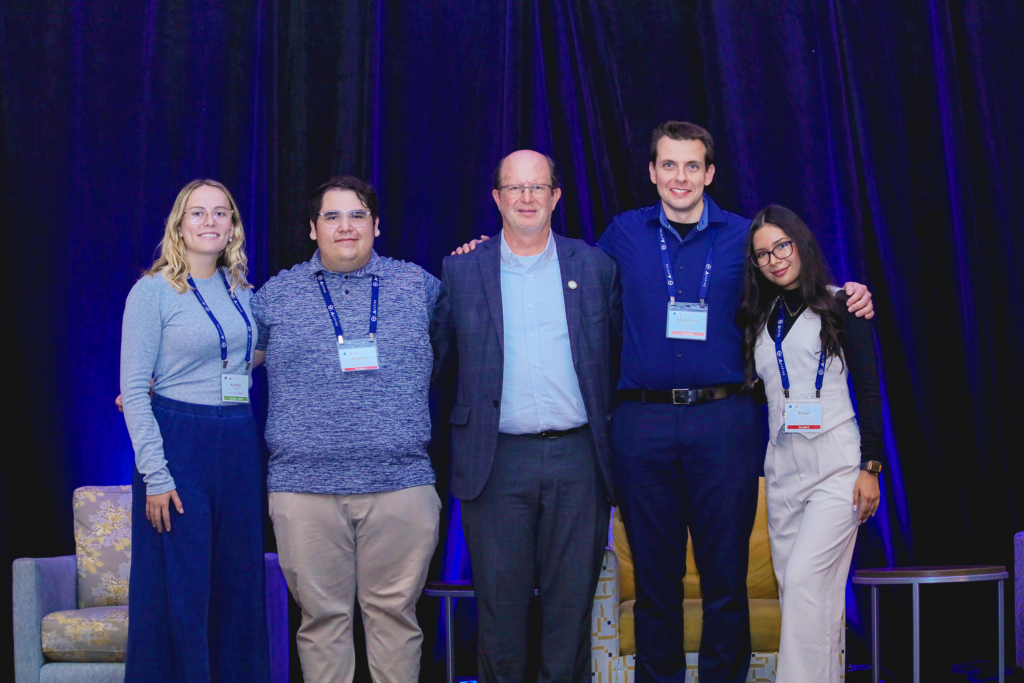
These student leaders attending Cohort trips toured electrification sites, met with related industry members, and learned how their education could be applied to careers.
Despite different majors, locations, and backgrounds, each of these student leaders were studying areas related to transportation — all influencing ASPIRE’s work for electrified transportation in self-sufficiency, economic benefits, and industry members.
“It was very good to be able to connect with all the students from other campus, with other research fields, and understand that all of these different areas somehow are related to electric vehicles,” Moras said.
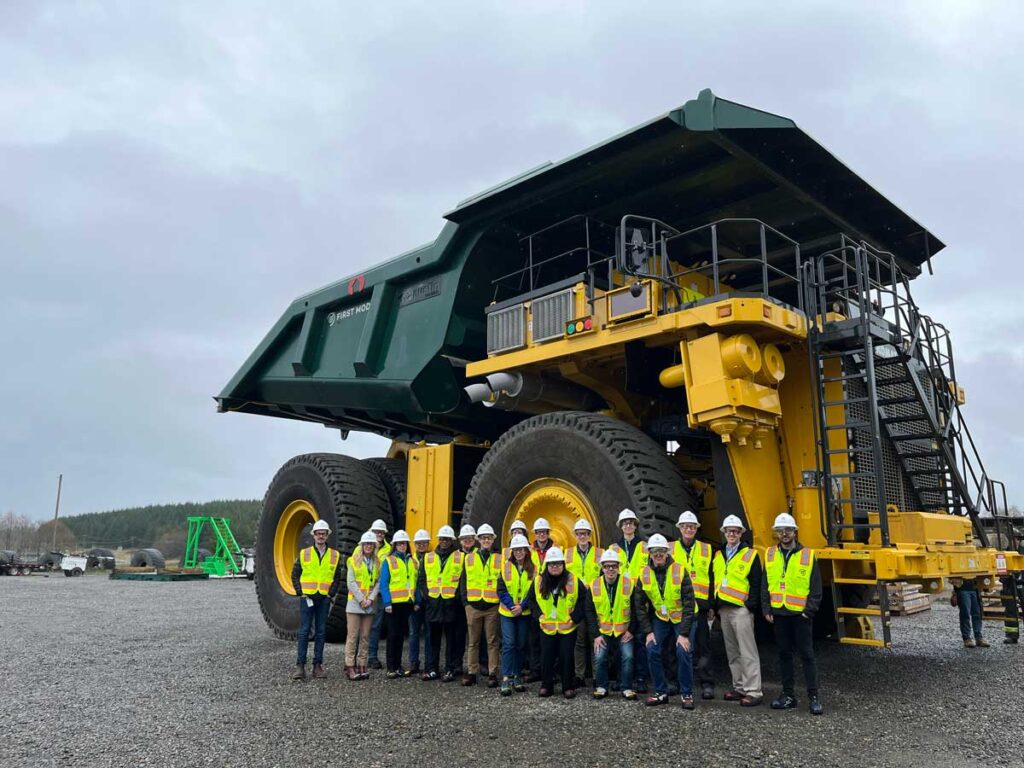
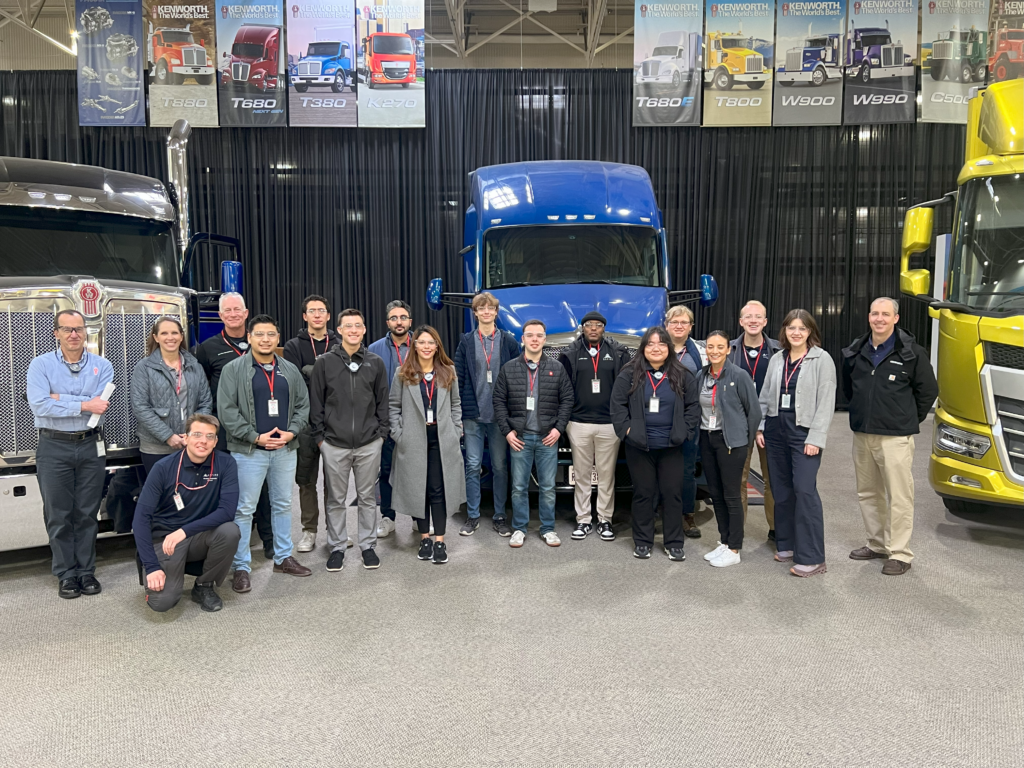
One of the most impactful trips was visiting Kenworth (PACCAR)’s Research & Development (R&D) Facility in Seattle, Washington, to learn about vehicle electrification. Moras found the interactions with Brian Lindgren, then the Director of R&D at Kenworth Truck Co., particularly insightful, as he learned from Lindgren’s technical knowledge and life experiences.
“I remember he stayed from 8 a.m. to 8 p.m., and he was really listening to us,” he said. “This was amazing — because someone who worked with so many ears; it was with the students — talking, and listening and answering questions.”
Awards & Achievements
Inspired by mentors like Lindgren and other connections formed at Purdue University and ASPIRE, Moras’s commitment to expand his leadership and communication experiences did not go unnoticed, according to his mentor Nadia Gkritza.
“Bruno has provided outstanding service to the Purdue academic community through teaching, outreach, and recruitment. He served as a Global Engineer Navigator, acting as an ambassador for the College of Engineering by representing Purdue at conferences, recruiting prospective students, and guiding them through the graduate application process. Additionally, he contributed as an instructor in Purdue’s Summer College for High School Students, a program that both serves the community and attracts future students,” shared ASPIRE’s Purdue Campus Director.
In 2023, Moras received the BRASA Publica award at the BRASA Summit, the biggest meeting among Brazilian students in North America, with his presentation, “Electric Vehicles adoption in Indiana: Evidence from a stated preference survey,” supervised by Gkritza.
When asked how Moras felt about the award, Moras replied with a smile, “It made me feel special. I was able to win something, also presenting my research in a very nice environment, so I felt special on that day.”
Bruno’s accomplishments continued throughout his Ph.D. program. He mentored several undergraduate students on research about transportation electrification. Because of his work, he was awarded the Outstanding graduate research mentor award at Purdue University for the 2024-2025 academic year, becoming the first student in Civil and Construction Engineering to receive the award.
“Bruno distinguishes himself through his enthusiasm for mentoring and his commitment to helping others succeed. His dedication to student success is demonstrated by the achievements of his mentees, several of whom have been accepted into prestigious graduate programs and have won poster and paper awards,” Gkritza explained.
Moras was also part of the team that won the first Innovation Challenge at the ASPIRE Annual meeting, and he was selected for the International Road Federation (IRF) Fellowship Program, a prestigious program that aims to develop future leaders in transportation engineering and policy.
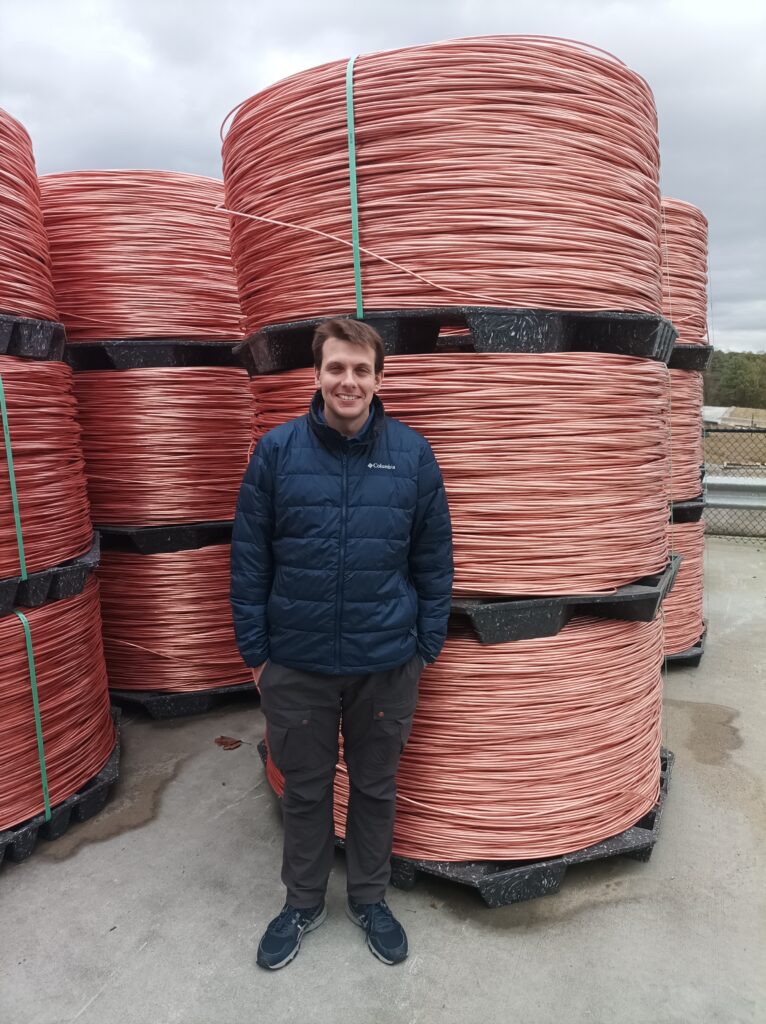
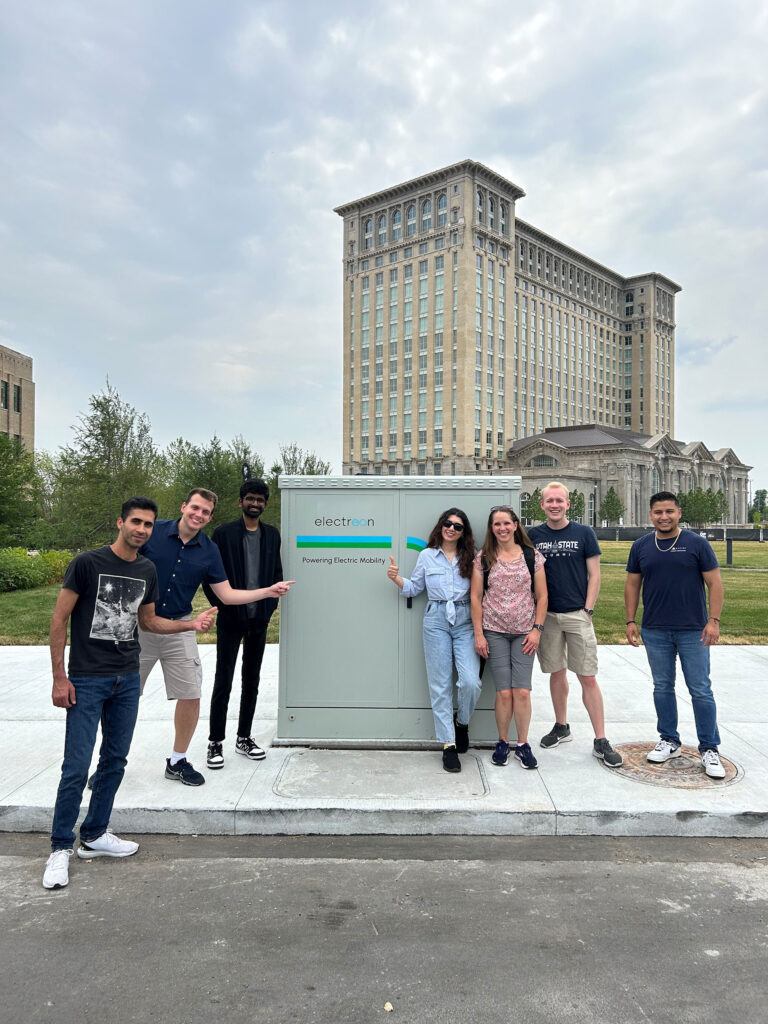
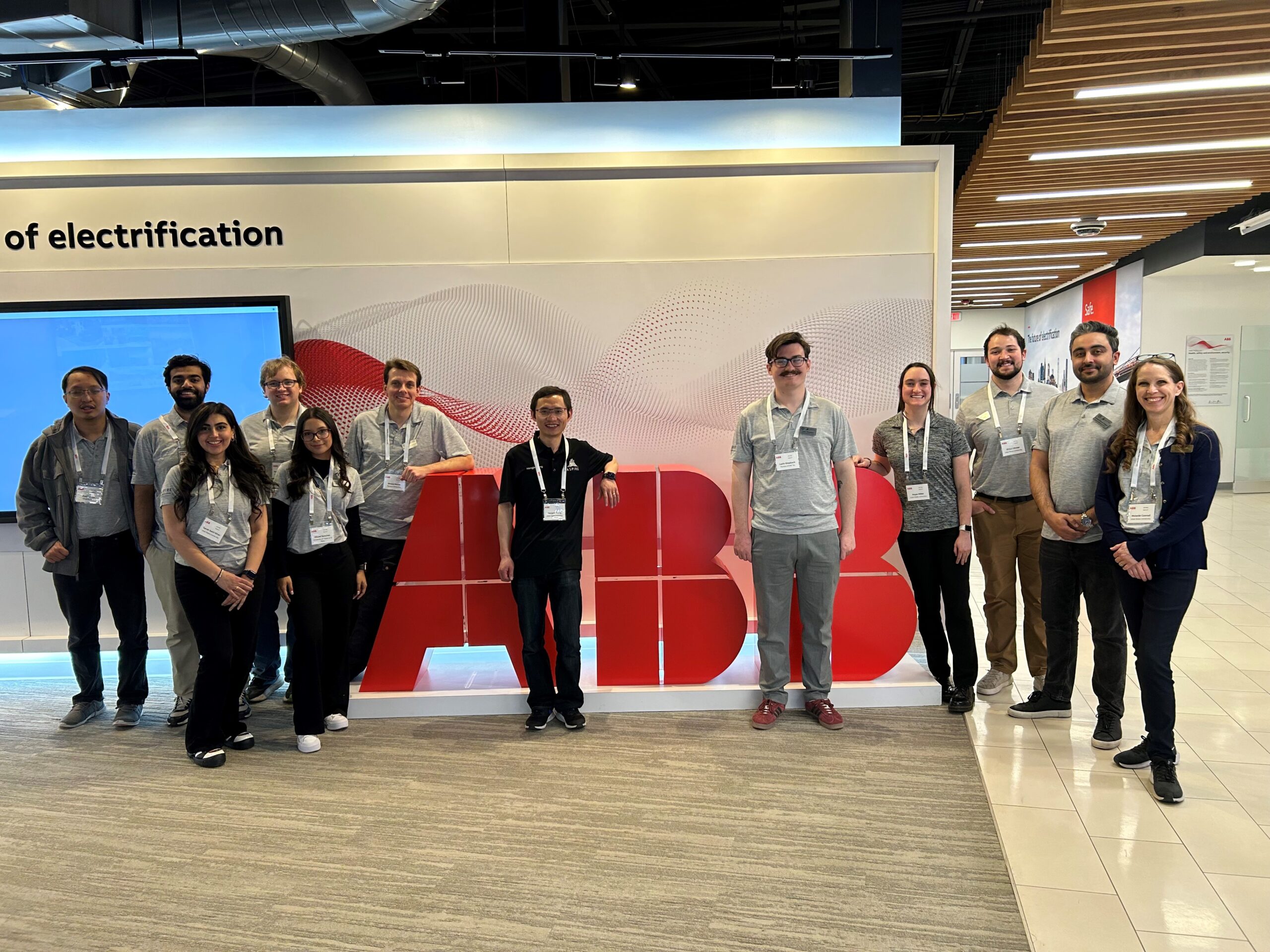
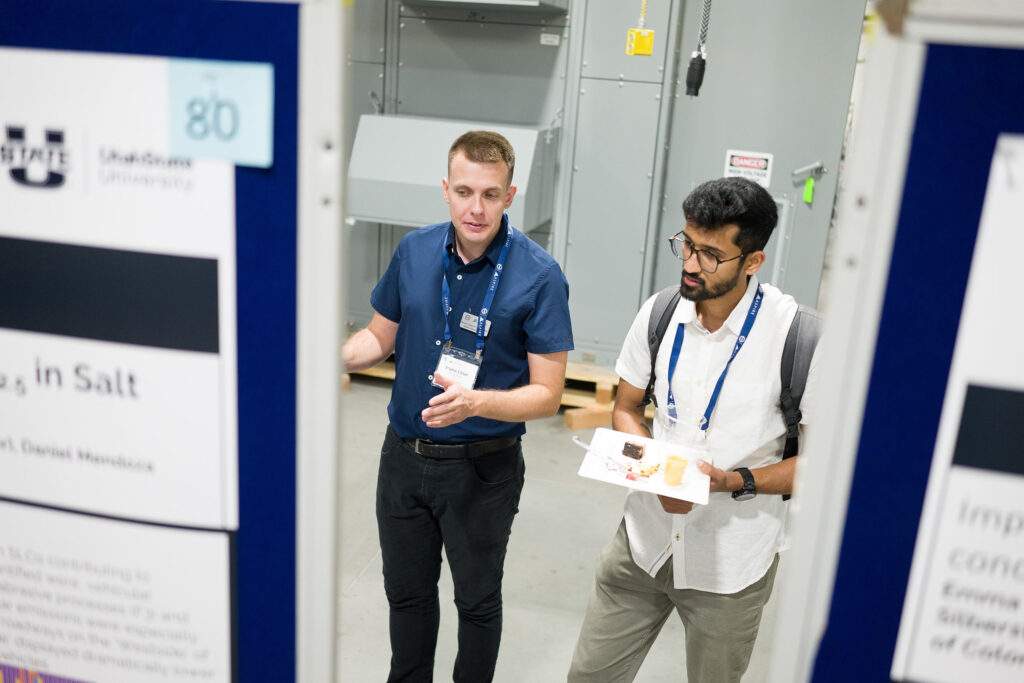
“With ASPIRE, I had the opportunity to understand how all of these different fields are related to the transportation electrification world,” Moras said.
In September 2026, Moras announced his acceptance of a faculty position at Southeastern Louisiana University in the Department of Industrial and Engineering Technology. Although Bruno just started in the position, he’s already shared what he learned at ASPIRE with his new students: “For capstone project, I proposed that some students investigate how they could increase the number of charging stations in the campus parking lot. The essence of the activity reminds me of what I found at ASPIRE as a student: technical knowledge applied to solve real-world problems.”
From listening to stories about cars as a child to conducting award-winning research on EV adoption, Moras turned a generational passion into a career dedicated to understanding and shaping the future of transportation.
“I feel proud to see my son achieving so much in an area that is connected to both my work and my father’s,” said Nilo Cesar, Moras’ father.
For the latest news, publications, and research highlights from ASPIRE, visit aspire.usu.edu.
Contact:
Kat Webb
Brand & Strategic Communication Manager, ASPIRE Foundation
Writer:
Anna Cliff
Marketing & Communications Specialist, ASPIRE Foundation
Video:
J.T. Miller & Noah Stewart
Multimedia Specialist, ASPIRE Foundation
ABOUT ASPIRE
ASPIRE, a National Science Foundation Engineering Research Center headquartered at Utah State University, leads groundbreaking research and development at the transportation-grid edge to accelerate electrification. With over 400 global collaborators, ASPIRE focuses on creating seamless, affordable electrified transportation systems, accessible for all vehicle classes, along with the public infrastructure needed to support them. By reducing costs, improving air quality, and fostering economic growth through job creation and workforce training, ASPIRE’s work spans engineering, social science, policy, and business. Partnering with top universities, industry leaders, and community groups, ASPIRE is driving the future of advanced transportation-grid systems. Learn more at aspire.usu.edu.