Discovery From Outside the Box: A Graduate Student’s Triumph through Challenges
At ASPIRE, researchers aren’t only pushing the boundaries of electrification. they’re also developing their abilities outside the lab. For electrical engineer and graduate student Brittany Piquet, this means expanding skills fit for the industry.
“I’ve loved my time here at ASPIRE,” Piquet said. “It’s definitely pushed me not only technically but also in terms of soft skills.”
Having been with ASPIRE since 2024, Piquet has been part of many different projects, such as designing printed circuit boards, or PCBs. Different PCBs serve different functions, such as taking temperature readings, interfacing with other system parts and switching components and transistors.
“PCBs are a form of neatly packaging electronic components that are intended for a specific purpose.” Piquet explained. “These boards are used in so many devices that people use every day, like a cell phone or even a blender.”
Similar to how PCBs are made up of many different components that contribute to a wider goal, most projects at ASPIRE are worked on by a wide range of researchers with different skill sets and backgrounds. Through this collaboration, Piquet has gained knowledge on how to coordinate between different systems, whether that be PCB interfaces or the engineers themselves.
“One of the skills that I’ve developed a lot over the last little bit is the ability to work together as a team and make all the little parts of the system come together to make the bigger system work,” Piquet said.
Planning and development is par for the course at ASPIRE. Innovation means trying things no one has done before, and while that often leads to discoveries, it also means facing unknown challenges. Piquet understands that struggle all too well, but it makes the triumphs even sweeter.
“You can’t just Google how to overcome the problem we’re facing, so it’s taught me to be a lot more resourceful and to think outside the box,” Piquet shared. “I get really excited every time we have just a little win because every little bit that we figure out, every little discovery that we come to, helps us get a little bit closer to the things we’ve planned becoming a reality.”
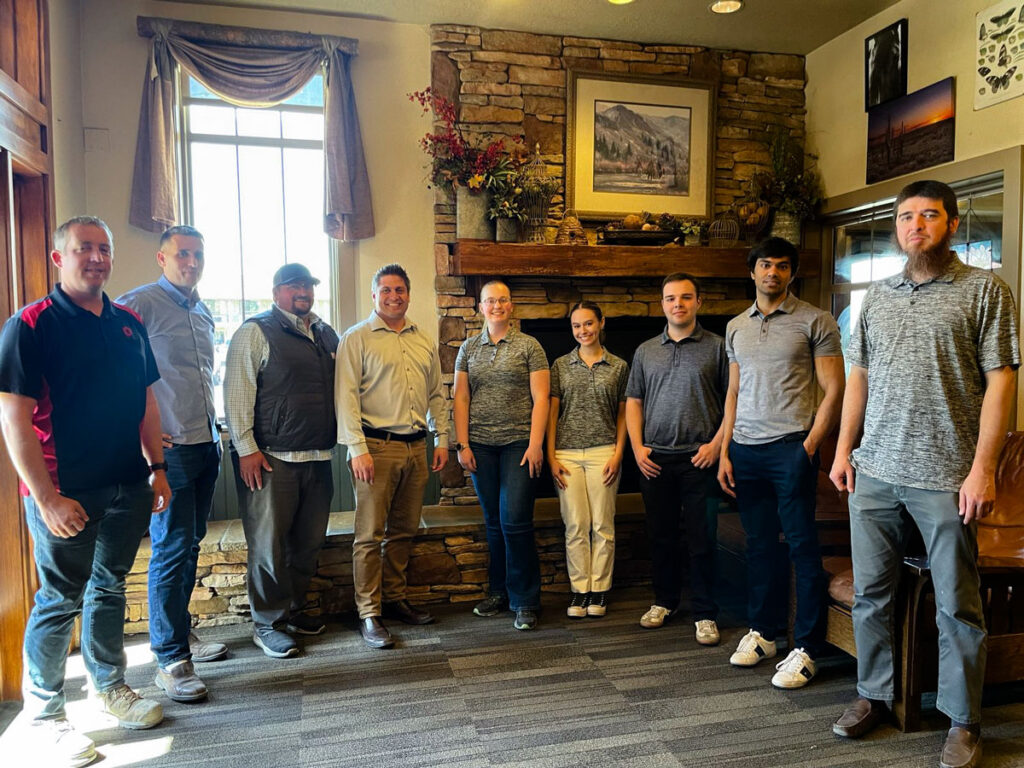
Getting involved with industry partners has been a unique benefit to working at ASPIRE and being involved with the ASPIRE Student Association. Piquet has been able to relate the problems facing her in the lab to the situations that those in the industry come across and learn how they’ve overcome them.
“I don’t necessarily have the opportunity in my classes to talk to people who are currently working on the things I’m learning about,” Piquet explained. “But through being here at ASPIRE and ASA events, I’ve had the opportunity to meet several people who are currently working on some of this groundbreaking research.”
Those who work with Piquet and have witnessed her growth from joining ASPIRE in 2024 to joining the engineering team full-time. Electrical Engineering Group Lead Mahmoud Mansour commented on the care that Piquet puts into her work and her consistency in going the extra mile.
“Brittany is someone I can always count on,” Mansour said. “She picks things up quickly, brings thoughtful ideas to the table and approaches challenges with patience and determination.”
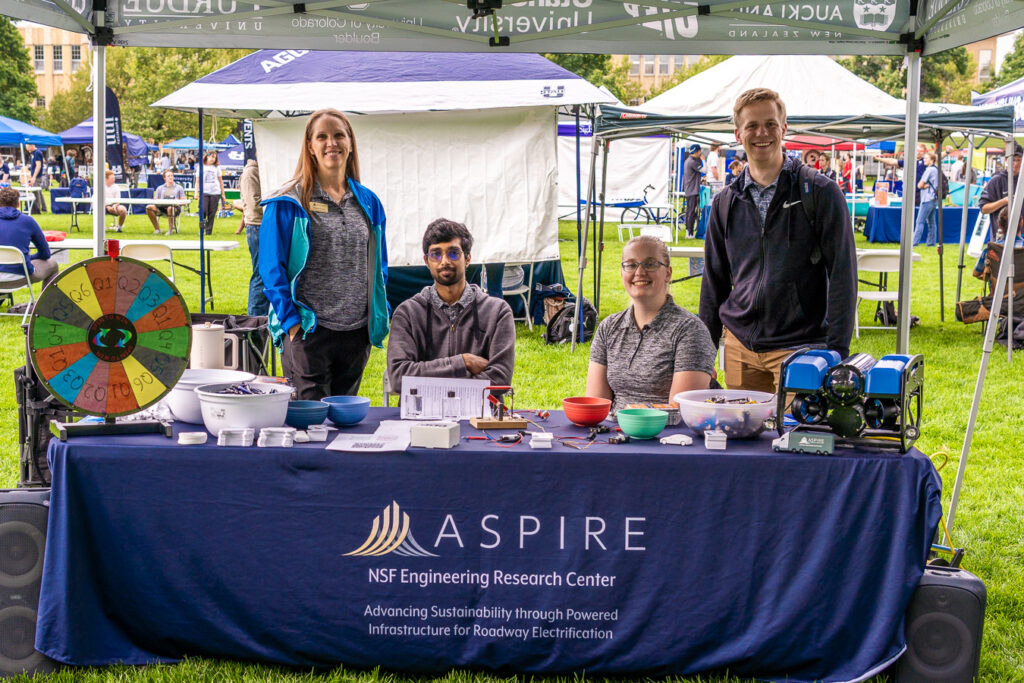
Inspiration and growth are some of the main takeaways Piquet has gotten from her experiences at ASPIRE. In a supportive environment, the sky is the limit.
“Here at ASPIRE, I feel like I’m surrounded by a lot of people who love what they do and are really good at what they do,” Piquet said. “That inspires me to become good at what I do, to put my best foot forward every day so that I can make the most of the opportunities that I have here.”
For the latest news, publications, and research highlights from ASPIRE, visit aspire.usu.edu.
Contact:
Kat Webb
Brand & Strategic Communication Manager, ASPIRE
Writer:
Lucy Larson
Communication Specialist, ASPIRE
ABOUT ASPIRE
ASPIRE, a National Science Foundation Engineering Research Center headquartered at Utah State University, leads groundbreaking research and development at the transportation-grid edge to accelerate electrification. With over 400 global collaborators, ASPIRE focuses on creating seamless, affordable electrified transportation systems, accessible for all vehicle classes, along with the public infrastructure needed to support them. By reducing costs, improving air quality, and fostering economic growth through job creation and workforce training, ASPIRE’s work spans engineering, social science, policy, and business. Partnering with top universities, industry leaders, and community groups, ASPIRE is driving the future of advanced transportation-grid systems. Learn more at aspire.usu.edu.