Building Infrastructure for People: ASPIRE Students Work to Keep Technology Human-Centered
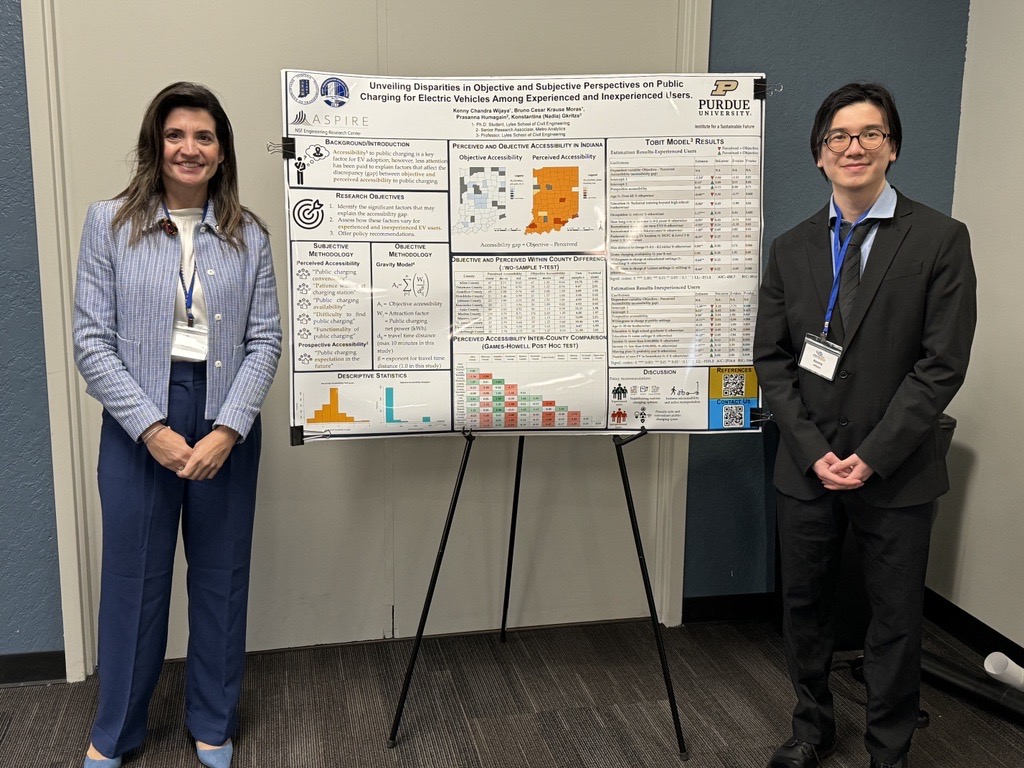
When planning where to construct charging systems, calculated accessibility is frequently used to determine the location of new charging stations and is the primary metric of availability. This includes the proximity to charging stations and the cumulative charging opportunity at a specific distance or travel time. However, ASPIRE Purdue researchers are discovering that calculated accessibility may not be the most influential factor on how EV users perceived the ease and availability of EV charging.
“Overall, the project found that the calculated spatial accessibility of EV chargers has a weak relationship with respondent’s perceived convenience of charging, and no relationship with their perceptions of the availability of chargers in their area,” said Ben O’Brien, a civil engineering graduate student. “Instead, respondents’ personal characteristics, typical travel behavior, and attitude and behavior towards charging had stronger effects on perceived convenience and availability.”
Corresponding author and Ph.D. student Kenny Chandra Wijaya explained the impact of this “surprising find,” highlighting the disconnect between the way planners define and track accessibility and the way EV users actually experience and interpret it.
“Planners often gravitate toward a techno-centric approach to infrastructure planning. In the charging station context, this is reflected in the predominant focus on questions like whether there are enough stations or how quickly a charger can replenish a battery,” Wijaya said. “While these are important considerations, planners can overlook a fundamental truth: infrastructure is ultimately built for people.”
Though technology and infrastructure play a role in his research, when considering the electrification of the future, people are the focus of Wijaya’s studies with ASPIRE.
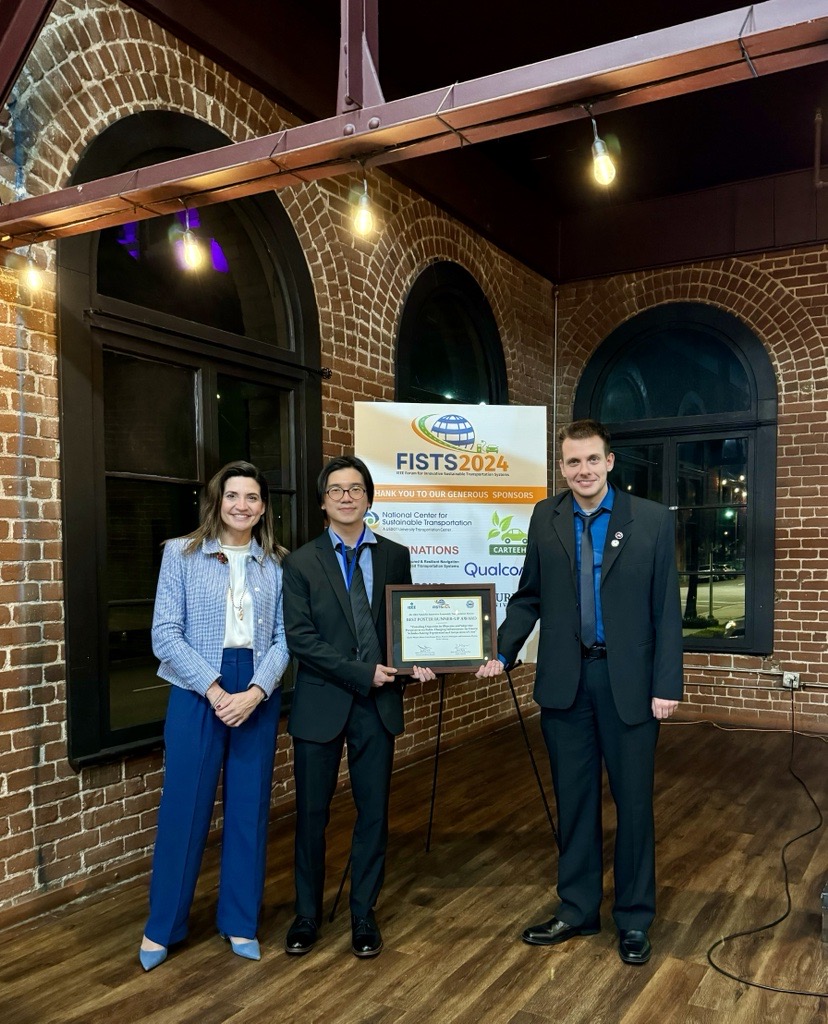
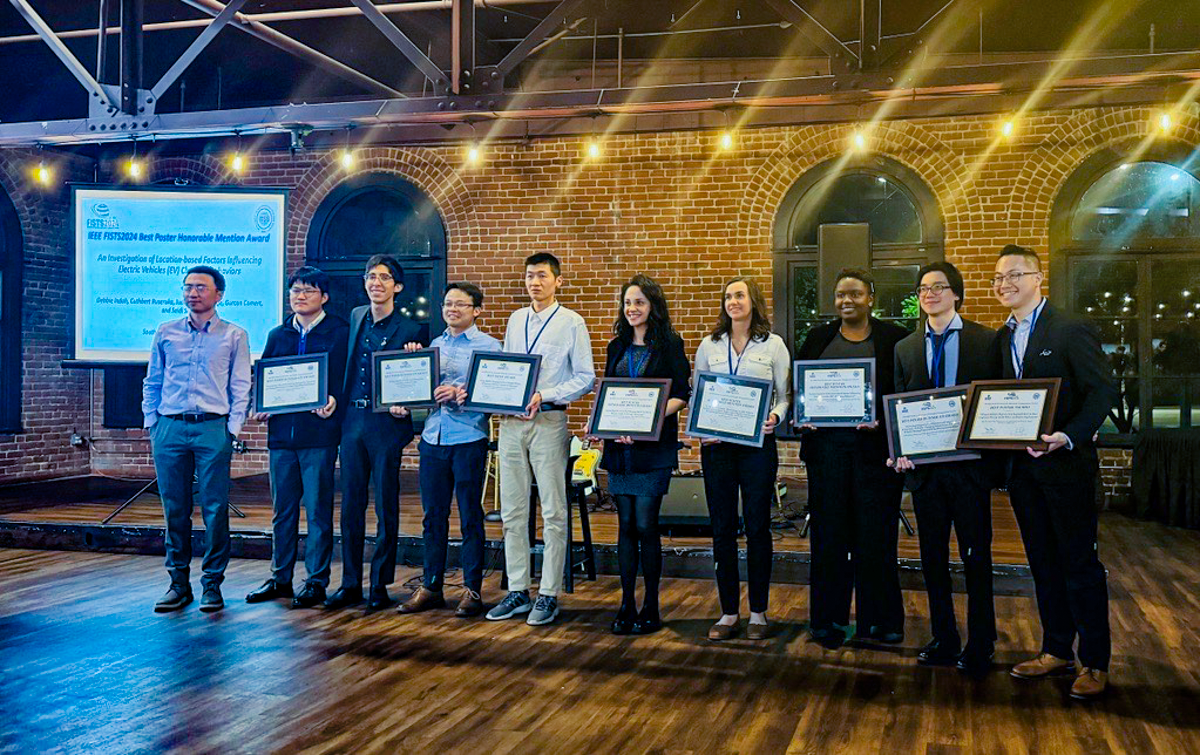
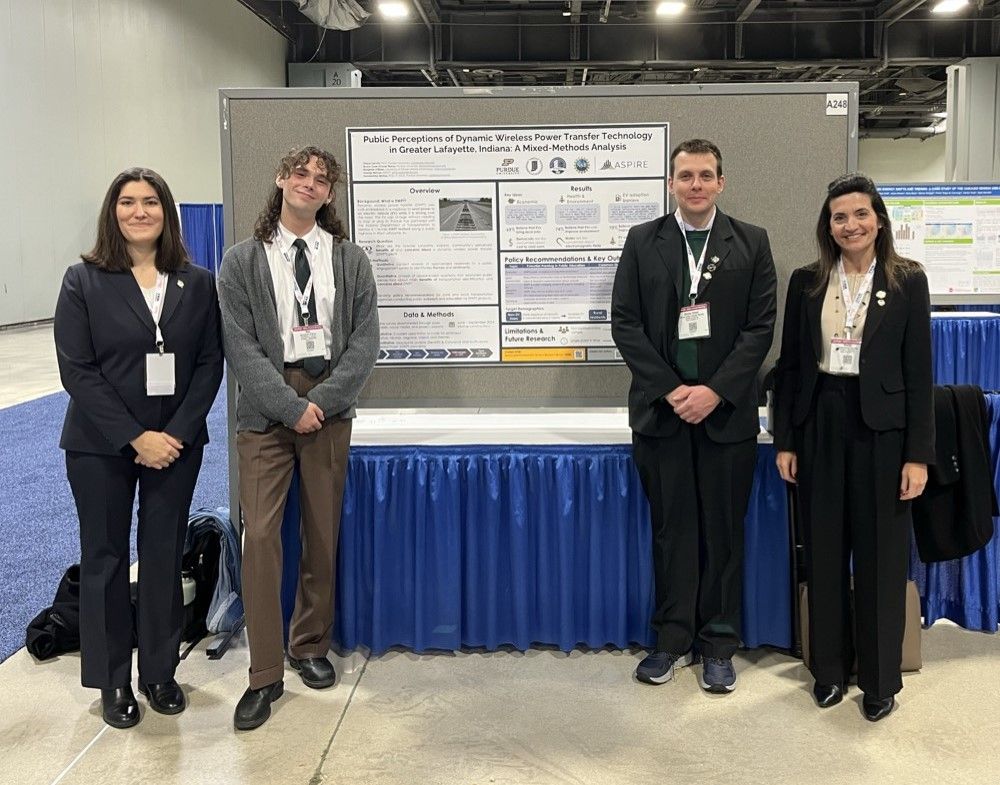
Right: Wijaya (second from the right) accepting an Honorable Mention for the Best Poster award.
“My research seeks to elevate the importance of human-centered considerations in how we design and deploy charging infrastructure,” he said. “When human-centered considerations are not meaningfully integrated into the planning process, even well-resourced initiatives risk falling short of their intended impact.”
Because of this, perceived accessibility — and ultimately widespread electrification — will not be feasible without the support and understanding of the public. For this study, a survey the team designed, with the help of co-author and Ph.D. student Bruno Moras, led to this unveiling of public perception.
“Our findings have important policy and engineering implications, informing the design of future EV charging networks, and suggest that perceived access to charging is unlikely to be improved by simply expanding networks without also supporting public outreach and education,” O’Brien explained.
With calculated accessibility not directly impacting EV users’ perceived accessibility, this team of researchers investigated what factors more accurately predicted these perceptions.
“Factors such as EV users’ travel behavior, sociodemographic characteristics, charging behavior, and charging attitudes proved to be stronger predictors of perceived accessibility to charging stations,” Wijaya explained.
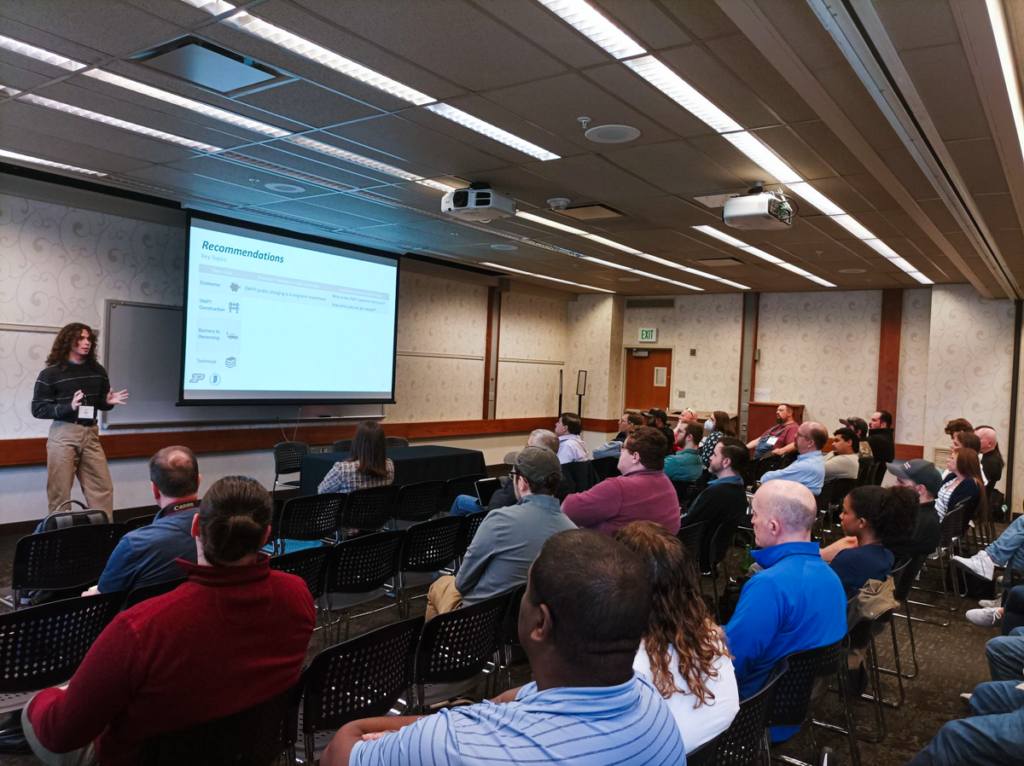
To study this, O’Brien calculated the number and type of EV chargers in short, medium, and long drives to contribute to the calculated accessibility. Not only was this data compared to the perceived accessibility, but the differences between urban and rural locations were examined. This comparison led to another unexpected discovery.
“Something which surprised me, specifically related to my contributions in calculated accessibility, was the disparity in charger access between urban and rural parts of Indiana,” O’Brien said. “While some larger cities, such as Indianapolis, had dozens of chargers, there are rural counties in the state without a single Level 2 or 3 charger. Inequalities between urban and rural ZIP codes were most extreme for shorter (5-minute) driving distances.”
Their research, conducted under the direction of Wijaya’s Ph.D. advisor, Nadia Gkritza, is entitled “Perceived Accessibility of Electric Vehicle Charging Stations: Contributing Factors and Conceptual Framework” and was published earlier this year by Transportation Research Interdisciplinary Perspectives, adding to the real-world discoveries ASPIRE researchers are delivering.
“This project demonstrated why public perceptions research is so important: gaps exist between the systems we aim build and what communities know and feel about these systems,” O’Brien said. “Research into EV perceptions helps find these gaps and propose policies to fill them, supporting ASPIRE’s mission of driving widespread transportation electrification.”
For the latest news, publications, and research highlights from ASPIRE, visit aspire.usu.edu.
About ASPIRE:
ASPIRE, a National Science Foundation Engineering Research Center headquartered at Utah State University, leads groundbreaking research and development to accelerate electrification. With over 400 global collaborators, ASPIRE focuses on creating seamless, affordable electrified transportation systems, accessible for all vehicle classes, along with the public infrastructure needed to support them. By reducing emissions, improving air quality, and fostering economic growth through job creation and workforce training, ASPIRE’s work spans engineering, social science, policy, and business. Partnering with top universities, industry leaders, and community groups, ASPIRE is driving the future of advanced transportation. Learn more at aspire.usu.edu.
Contacts:
Kat Webb
Content Director
Marketing & Communications
ASPIRE ERC
Writer:
Kayleigh Kearsley
Marketing & Communications Intern
ASPIRE ERC